





How Bulk Buyers Should Specify a Fence Semi Trailer for Bulk Cargo Transport
 Oct 16, 2026|
 View:6
How Bulk Buyers Should Specify a Fence Semi Trailer for Bulk Cargo Transport
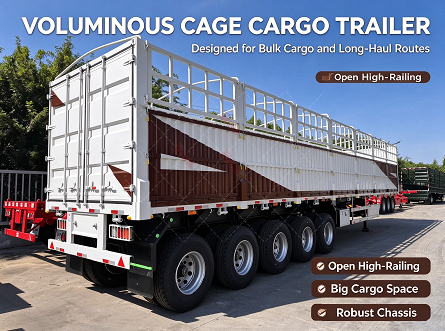
A fence semi trailer is one of the most flexible assets in a logistics fleet. It carries bagged cement, grain, fertilizer, feed, timber, steel products, palletized goods, and even livestock—because the open fence structure allows top/side loading while still containing loose cargo. But for fleet purchasers and importers buying 10, 20, or 100 units, the wrong specification is more expensive than the wrong price.
Below is a buyer-centered breakdown for procurement teams evaluating a transport semi trailer or bulk semi trailer program.
1. Start with cargo density, not “max tonnage”
Many suppliers advertise “60T fence trailer” or “80T bulk semi trailer.” That number means little without context.
Light/volumetric cargo: grain, fodder, cartons → taller fence (1500–2000 mm)
Heavy/dense cargo: cement bags, steel, blocks → lower fence (600–900 mm), lower center of gravity
Mixed fleet: modular/removable fence sections are better than one fixed design
2. Axle count must match regulation + route
| Axles | Typical Payload | Best Use |
|---|---|---|
| 2 axle | 25–40T | Light regional freight |
| 3 axle | 40–60T | Standard bulk cargo / export fleets |
| 4 axle | 60–80T+ | Heavy construction, rough-road markets |
| 5 axle | High-volume bulk + special road rules | Agricultural / industrial bulk corridors |
A fence semi trailer is not just “more axles = better.” More axles = higher tare weight, more tires, more brake parts, higher permit risk.
Buyers in Africa, Middle East, Latin America, and Central Asia should confirm: max GVW / GCW, per-axle load limit, bridge formula / wheelbase rules, container twist-lock need (20ft/40ft).
3. Fence height & post system decide uptime
Removable stakes → fence semi trailer becomes flatbed when empty
Corrugated side panels → better impact resistance
Cold-formed posts + high-tensile bolts → less bulging under bulk load
Side doors / drop sides → faster unloading, less forklift damage
If you transport bagged fertilizer, the lateral pressure on panels is constant. Ask the factory: “What is the certified fence pressure rating, not just height?”
4. Chassis steel & welding = fleet lifespan
For bulk buyers, the main beam is the asset. Look for:
Q345B / T700 high-tensile steel
500 mm beam height, verified plate thickness (top/web/bottom)
Submerged-arc welding on main seams
Ultrasonic / X-ray weld inspection
Shot blasting SA 2.5 before painting
Zinc-rich primer + polyurethane topcoat
Cheap trailers save 8–15% upfront but can cost far more in chassis cracks, fence deformation, and resale loss.
5. Suspension: mechanical vs air
Mechanical leaf spring: rugged, cheap, best for rough roads/mines/farms
Air suspension: protects sensitive cargo, better tire life, smoother ride, higher cost ($1,200–2,500+)
Mixed: 4 mechanical + 1 lift axle is common for heavy bulk + road flexibility
Fleet buyers should decide by road quality, not brochure.
6. Brakes, tires, and parts commonality
Bulk orders fail on spare parts, not on photos. Specify:
Dual-line pneumatic brake + WABCO relay valves
ABS where local law requires
JOST king pin & landing gear
FUWA / BPW / branded axles if local service exists
Tire standardization: 12R22.5 or 315/80R22.5 across the fleet
If 50 trailers use 3 tire sizes, your warehouse becomes expensive.
7. Customization checklist for RFQ
When requesting quotes for a transport semi trailer fleet, include:
Payload range + average cargo density
Overall length/width (12500×2500 mm common)
Fence height + post spacing
Floor thickness (3–6 mm checkered)
Axle brand/tonnage
Suspension type
Brake + ABS + air tank size
Twist locks yes/no
Painting/standard/corrosion package
Destination port + local axle law
Spare parts kit per 10 units
Inspection photos + load test report
8. Bulk order commercial terms
MOQ: 1 unit possible, but bulk price starts at 5–10+
Deposit: 30% TT + 70% before shipment
LC at sight for container/bulk/Ro-Ro shipments
Lead time: 15–30 days standard, 30–45 days heavy custom
Stacking: 2-in-1 or 3-in-1 nesting reduces ocean freight
Docs: CI, PL, B/L, CO, conformity cert, weld/QA report
9. Total cost of ownership > unit price
A fence semi trailer should be evaluated on:
Tare weight vs legal payload
Tire wear
Brake chamber/common parts
Fence repair cost
Resale value in local market
Supplier’s export track record
A $11,000 trailer that breaks monthly is worse than a $15,500 trailer that runs 6 years.
10. Buyer takeaway
If you run bulk cargo, agricultural freight, or mixed general cargo, a fence semi trailer is often better than a box trailer (ventilation, side load) and more secure than a flatbed (cargo containment).
But fleet buyers should not buy “a fence trailer.” They should buy a configured bulk semi trailer with:
Correct axle law compliance
Cargo-matched fence system
Verifiable steel/weld quality
Standardized spare parts
Factory inspection before loading
That is what separates a cheap purchase order from a profitable fleet asset.
Need a Fence Semi Trailer Built for Your Cargo?
Bagged cement · grain · fertilizer · steel · pallets · agricultural bulk
Open Product Page