





What is a lowbed semi trailer?
 Nov 15, 2024|
 View:1484
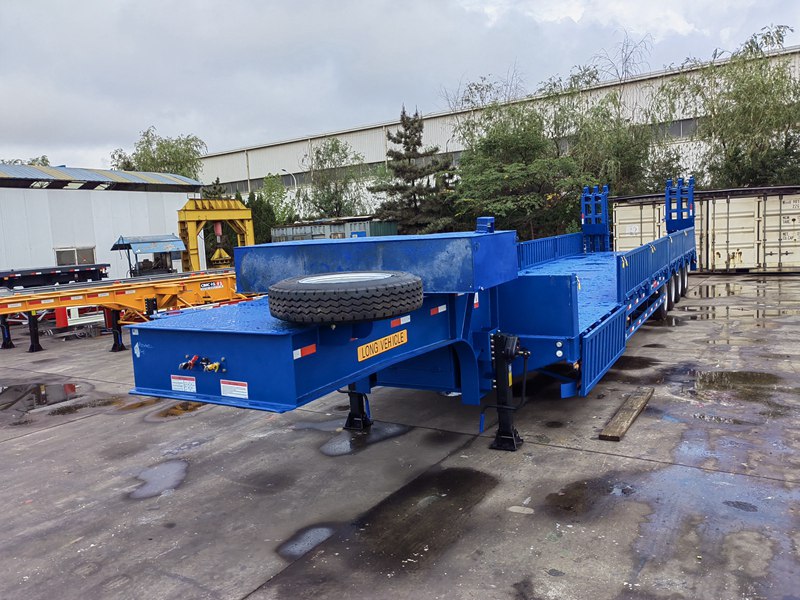
A lowbed semi trailer is a specialized type of trailer used in the transportation industry, particularly for carrying heavy and oversized cargo.
I. Design and Structure
Low - lying Bed
The most distinctive feature of a lowbed semi trailer is its low - lying bed. This design allows for a lower center of gravity when loaded, which is crucial for the safe transportation of tall and heavy items. The bed is typically much closer to the ground compared to standard trailers, often with a height ranging from a few inches to a couple of feet off the ground, depending on the specific design and intended use.
The low height is achieved through a combination of a shallower frame structure and specialized suspension systems. This enables the trailer to carry cargo that might not fit under the height restrictions of a normal trailer, such as large construction machinery like bulldozers, excavators, and cranes.
Axle Arrangement
Lowbed semi trailers usually have multiple axles, often two or three axles, but some heavy - duty models may have more. The axles are spaced in a way to evenly distribute the weight of the heavy cargo. For example, a three - axle lowbed trailer can better handle extremely heavy loads as the weight is spread across three sets of wheels.
The axle configuration also affects the trailer's maneuverability. A well - designed axle arrangement allows the trailer to make turns more smoothly, even when carrying long and bulky items. Some axles may be steerable, which further enhances the trailer's ability to navigate tight corners.
Frame and Reinforcements
The frame of a lowbed semi trailer is made of high - strength steel to support the heavy loads. It is often thicker and more robust than the frames of regular trailers. Reinforcements are added at key stress points, such as near the axles and at the connection points to the towing vehicle.
These reinforcements ensure that the frame can withstand the forces exerted by the cargo during transportation, especially when going over bumps, making turns, or braking. The trailer may also have additional cross - members and longitudinal members to provide extra strength and rigidity.
II. Cargo Types and Applications
Construction Equipment
One of the primary uses of lowbed semi trailers is in the construction industry. They are used to transport large construction machinery from one job site to another. For example, bulldozers can be loaded onto a lowbed trailer for relocation between different construction projects.
Cranes, which are often tall and heavy, can also be safely transported on lowbed semi trailers. The low - lying bed allows for the crane's long boom to be accommodated without exceeding height limitations on roads.
Industrial Machinery
In the manufacturing and industrial sectors, lowbed semi trailers are used to move heavy industrial machinery. This includes large presses, generators, and turbines. The trailers can handle the significant weight and size of these machines, ensuring they are delivered intact to their destination.
For example, power plants may use lowbed semi trailers to transport large turbines for installation or maintenance. The trailers can navigate through various terrains and road conditions to reach the power plant site.
Over - sized and Heavy Cargo
Lowbed semi trailers are ideal for transporting over - sized and heavy cargo that does not fit within the dimensions of standard trailers. This can include large steel structures, pre - fabricated building components, and oversized containers.
They are also used for transporting statues, large sculptures, or other large and heavy artworks. The trailers provide a stable platform for these items during transit, protecting them from damage.
III. Safety Considerations
Loading and Securing
Proper loading techniques are essential for the safety of lowbed semi trailer transportation. The cargo must be evenly distributed on the bed to maintain the trailer's balance. Loading ramps are often used to load heavy machinery onto the trailer, and these ramps need to be in good condition and properly attached.
Once the cargo is loaded, it must be securely fastened using chains, straps, or other appropriate tie - down devices. The tie - downs need to be rated for the weight of the cargo and should be inspected regularly to ensure they are in good working condition.
Visibility and Signaling
Due to the size and often - over - sized nature of the cargo, visibility can be a challenge when towing a lowbed semi trailer. Additional signage and lighting are required to alert other road users. For example, wide - load signs are used to indicate that the trailer is carrying a wide - bodied cargo, and extra lights may be added to improve visibility at the rear and sides of the trailer.
The towing vehicle must also have appropriate mirrors to provide the driver with a clear view of the trailer and its surroundings. In some cases, escort vehicles may be required to assist with traffic management and ensure the safe passage of the lowbed semi trailer on the road.
Road and Bridge Clearances
Before transporting a load on a lowbed semi trailer, it is crucial to check the road and bridge clearances along the intended route. The low - lying bed may allow for taller cargo, but there are still limitations, especially when passing under bridges or through tunnels.
Some routes may require special permits due to the size and weight of the cargo being carried on the lowbed semi trailer. These permits ensure that the transportation is legal and that appropriate safety measures are in place.
IV. Maintenance and Cost
Regular Maintenance
Lowbed semi trailers require regular maintenance to ensure their safe and efficient operation. This includes inspection and maintenance of the axles, brakes, suspension systems, and tires. The axles need to be greased regularly, and the brakes should be checked for proper function.
The frame and bed should be inspected for signs of wear, rust, or damage. Any damaged or worn - out parts should be replaced promptly to prevent further deterioration and ensure the trailer's structural integrity.
Cost Considerations
The initial cost of a lowbed semi trailer is relatively high compared to standard trailers due to its specialized design and construction. However, the investment is often justified for companies that regularly transport heavy and over - sized cargo.
Maintenance costs can also be significant, especially if the trailer is used frequently in harsh conditions. Replacement parts for lowbed semi trailers may be more expensive than those for regular trailers due to their specialized nature. But proper maintenance can extend the trailer's lifespan and reduce long - term costs.
In conclusion, a lowbed semi trailer is a vital component in the transportation of heavy and over - sized cargo. Its unique design, capabilities, and safety considerations make it an essential tool in industries such as construction, manufacturing, and art transportation.