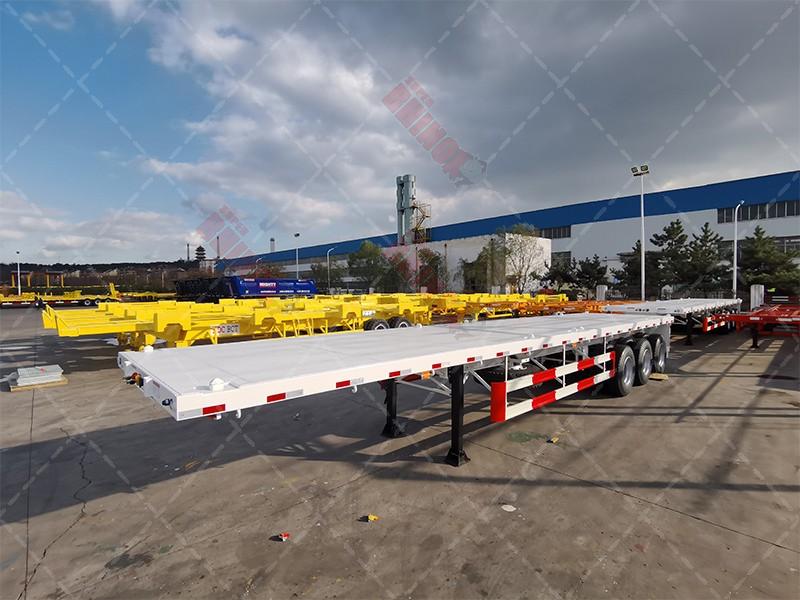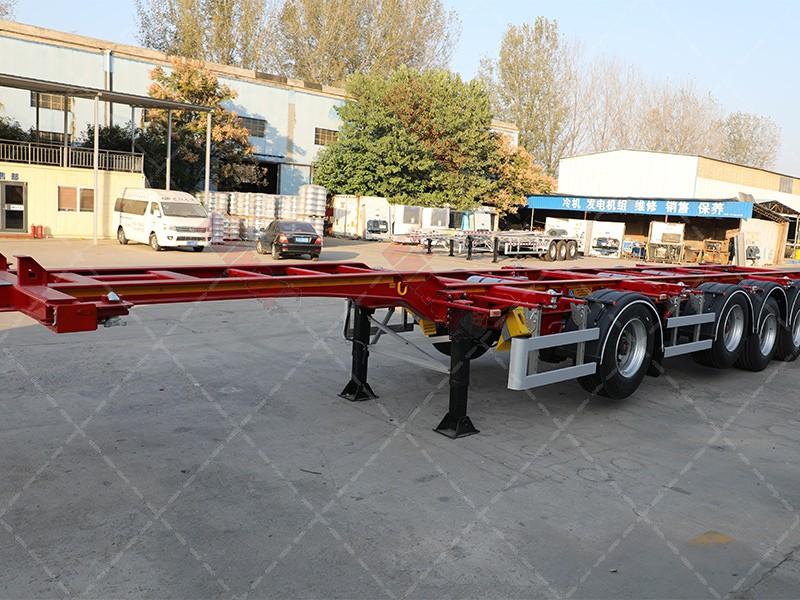





Container Semi Trailers: A Guide to 20FT, 40FT
 Nov 13, 2025|
 View:1640
The global supply chain is the circulatory system of the modern world, and the container semi-trailer is one of its most vital arteries. These specialized vehicles are the workhorses that bridge the gap between massive container ships and the final destination of goods, whether a warehouse, distribution center, or retail store. While they may seem like simple metal boxes on wheels, the choice between different sizes—primarily the 20-foot and 40-foot units—is a critical business decision with significant implications for cost, efficiency, and operational flexibility. Understanding the nuances of these dimensions and their applications is essential for anyone involved in logistics, shipping, or procurement.
The Standard Workhorses: 20FT and 40FT Containers and Trailers
The dimensions of container semi-trailers are dictated by the standardized shipping containers they are designed to carry. The two most common sizes are:
20FT Container Trailer: Designed to carry a single 20-foot container, which has internal dimensions of approximately 19'4" long by 7'9" wide (about 1,170 cubic feet). The trailer itself is a simple, robust chassis with twist locks to secure the container.
40FT Container Trailer: The most common variant globally, built to transport a standard 40-foot container (internal dimensions approx. 39'6" long by 7'9" wide, or 2,390 cubic feet). This includes standard 40ft dry vans, as well as high-cube (40HC) versions, which offer an extra foot in height (9'6" vs. 8'6") for increased volume.
The fundamental difference is capacity. A 40ft container offers more than double the cubic volume of a 20ft unit, making it inherently more efficient for moving large volumes of a single commodity.
Pricing Dynamics: A Multifaceted Equation
The price of a container semi-trailer is not a single figure but a range influenced by numerous factors. A basic new 40ft skeletal trailer can start from 35,000, while a 20ft trailer might be slightly less, but the disparity in trailer cost is often smaller than one might expect. The final price is heavily influenced by:
Specifications and Components: The base chassis price can escalate quickly with additions.
Axles: Standard tandem axles are common, but lift axles (which can be raised when the trailer is empty to save on tire wear and toll fees) add cost.
Suspension: Air-ride suspension is superior for protecting fragile cargo and is a premium over mechanical leaf-spring suspension.
Materials: The use of high-tensile steel reduces the trailer's tare weight (its own weight), allowing for greater payload—a feature that commands a higher price.
Braking Systems: Advanced anti-lock braking systems (ABS) and disc brakes are cost-adders that enhance safety.
Market New vs. Used: The used trailer market is vast. A well-maintained 5-year-old 40ft trailer might be available for 18,000, offering significant upfront savings, though with potential higher maintenance costs.
Brand and Region: Established brands from the US or Europe command a premium over newer entrants from other markets due to perceived reliability, resale value, and parts availability.
It's crucial to note that the cost of the trailer is only part of the total cost of ownership (TCO). Fuel, maintenance, insurance, and driver wages often outweigh the initial capital outlay over the trailer's lifespan.
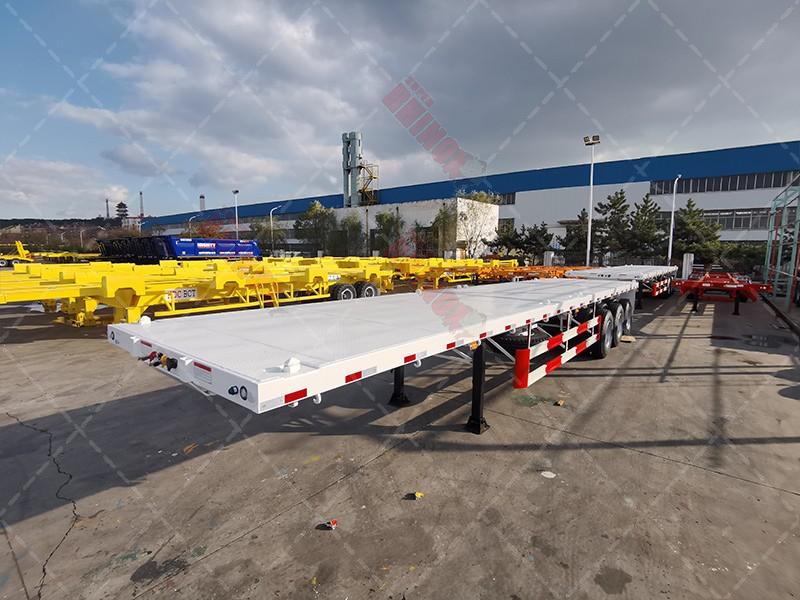
Strategic Applications: Choosing the Right Tool for the Job
The choice between a 20ft and 40ft container semi-trailer is not merely about size; it's a strategic decision based on the nature of the cargo and the logistics network.
When a 20FT Trailer Shines:
High-Density, Low-Volume Cargo: For heavy goods like machinery parts, metals, or dense materials that quickly reach the maximum weight limit (around 24-28 metric tons, depending on regulations) before filling the space of a 40ft trailer.
Urban and Constrained Logistics: Navigating narrow city streets, making deliveries to small businesses with limited docking space, or operating in historic European towns where a 40ft trailer is impractical.
Less-Than-Container-Load (LCL) and Multi-Stop Deliveries: A carrier can consolidate several smaller LCL shipments into a 20ft container for a specific region, then use a 20ft trailer for efficient, multi-stop deliveries without the wasted space of a half-empty 40ft trailer.
The Dominance of the 40FT Trailer:
Volume Efficiency and Cost-Per-Unit: This is the core advantage. For low-density, high-volume goods like consumer electronics, furniture, or clothing, the 40ft trailer dramatically reduces the cost per item shipped. It is the default choice for moving full container loads (FCL) from ports to distribution centers.
Domestic Intermodal Freight: A 40ft container can be seamlessly moved from ship to train to truck without being opened, maximizing the efficiency of intermodal transport. This is the backbone of international trade.
High-Cube Variants: The 40HC trailer is indispensable for ultra-lightweight, voluminous cargo like plastic toys, packaging materials, and party supplies, where maximizing cubic capacity is the key to profitability.
Beyond the Standard: Specialized Configurations
The logistics world has also developed innovative solutions that blur the lines between these standard sizes.
20FT/40FT Combination (or "Combo") Trailers: These are extendable trailers that can carry either a single 40ft container or two 20ft containers. They offer maximum flexibility for operators who handle a mix of cargo types, eliminating the need to own dedicated trailers for each size. This flexibility comes at a higher initial purchase price but can be a wise long-term investment for diversified fleets.
Selecting a container semi-trailer is an exercise in integrated logistics. The decision between a 20ft and a 40ft unit cannot be made on price alone. It requires a deep analysis of the cargo profile (weight and density), the geographical and infrastructural constraints of the routes, and the overall operational model. While the 40ft trailer reigns supreme in global volume transport due to its unparalleled efficiency, the nimble 20ft trailer remains an essential tool for specific, high-value niches. Ultimately, the right trailer is the one that, as part of a broader system, moves goods from origin to destination most reliably, safely, and cost-effectively, ensuring the smooth functioning of the global economy.