





Guide to oil tanker trailers: Transporting gasoline, diesel, crude oil, fuel oil, lubricants solution
 Nov 27, 2025|
 View:443
Oil tanker trailers are the unsung heroes of modern logistics, forming the critical link in the supply chain that delivers the energy and materials driving our world. These specialized vehicles are engineered to safely transport a diverse range of petroleum-based products—from the gasoline in our cars to the jet fuel powering aircraft—across vast distances. Their design is a sophisticated blend of engineering rigor and safety innovation, tailored to handle the unique chemical and physical properties of different liquids. This article explores the intricate world of oil tanker trailers, detailing the types of fuels they carry, the specialized trailers used for each, and the critical safety technologies that make this vital transportation possible.
1.The Varied Cargo: Types of Petroleum Products Transported
Oil tanker trailers are designed to carry a wide spectrum of liquid cargoes, each with distinct properties requiring specific handling considerations.
Gasoline and Diesel: These most common vehicle fuels are primarily transported in petroleum tanker trailers . Gasoline, with a density of approximately 0.72-0.76 g/cm³, is more volatile and less dense than diesel (0.84-0.86 g/cm³) . This density difference means that a tanker can carry more diesel by volume before reaching weight limits, a critical factor in logistics planning. These fuels are typically transported from refineries to distribution centers and retail gas stations, forming the backbone of the ground transportation fuel supply chain .
Crude Oil: Transported in its unrefined state from extraction sites to refineries, crude oil requires specially designed crude oil tank trailers with significant capacity, often ranging from 30,000 to 50,000 liters (7,925 to 13,208 gallons) . These trailers are built with robust materials and enhanced safety features, including vapor recovery systems and specialized valves, to handle the variable composition of crude oil, which can contain various impurities and have differing viscosities .
Fuel Oil: This category includes heavier residual oils used for industrial heating, power generation, and marine engines. Fuel oil often requires trailers with heating capabilities or insulation to maintain viscosity for pumping, especially in colder climates . Some fuel oils may also be transported in trailers with multiple compartments to allow for simultaneous transport of different grades .
Lubricants: Engine oils, greases, and other lubricating products are typically transported in smaller capacity trailers or specialized compartments within multi-product tankers . They require dedicated containment to prevent contamination of other petroleum products. Some lubricants with specialized formulations may require tanks made from specific materials to maintain product purity .
Jet Fuel: Also known as aviation turbine fuel, this high-purity petroleum product demands extremely clean and dedicated trailers to prevent contamination that could compromise aircraft safety . Jet fuel often requires segregated transportation systems and may be transported in trailers with specialized coating systems to maintain fuel quality .
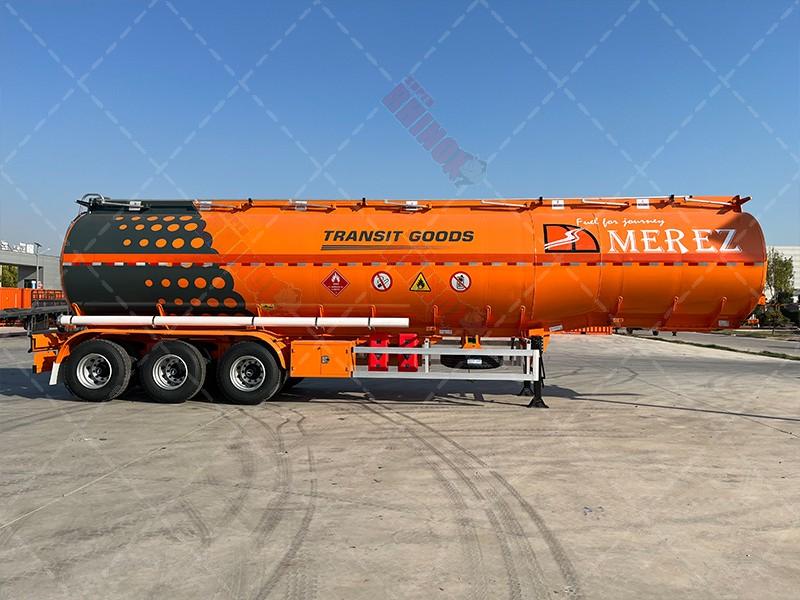
2.Tailored Designs: Trailer Types for Different Fuels
The diverse characteristics of petroleum products have led to the development of specialized tanker trailers, each optimized for specific cargo requirements.
Petroleum and Fuel Tank Trailers
These are the most common tankers on the road, designed specifically for transporting gasoline, diesel, and fuel oil. They typically feature a cylindrical shape and are constructed from carbon steel, stainless steel, or aluminum . Their design includes internal baffles to minimize liquid surge during transportation, significantly improving vehicle stability and safety . Capacities typically range from 30,000 to 65,000 liters, with some models capable of carrying up to 90,000 liters .
A significant innovation in this category is the multi-compartment trailer, which can feature up to seven separate sections . This design allows for the simultaneous transport of different products—such as gasoline, diesel, and lubricants—in a single trip, dramatically improving logistical efficiency for fuel distributors serving gas stations with multiple product requirements .
Chemical Tank Trailers
For transporting hazardous chemicals or specialized fuels with additive packages, chemical tank trailers offer enhanced safety features . These trailers are typically constructed with stainless steel or fiberglass-reinforced plastic (FRP) for superior corrosion resistance . They incorporate advanced safety systems including vapor recovery, pressure relief valves, and electronic stability control to manage the risks associated with hazardous materials transport .
Crude Oil Tank Trailers
Engineered for the rugged conditions of oil fields and long-distance transport, crude oil tank trailers are among the most heavy-duty options available . With capacities reaching up to 50,000 liters or more, these trailers feature reinforced construction and specialized safety valves to handle the variable composition of unrefined petroleum . Their design prioritizes durability and safety, given the challenging environments in which they operate .
Bitumen/Hot Oil Tank Trailers
Transporting materials like asphalt and heavy bitumen requires specialized heated tank trailers . These trailers feature integrated heating systems and insulation to maintain the cargo at elevated temperatures (typically 130-200°C) to keep it in liquid form for discharge . Without these heating capabilities, these viscous materials would solidify, making transportation and unloading impossible .
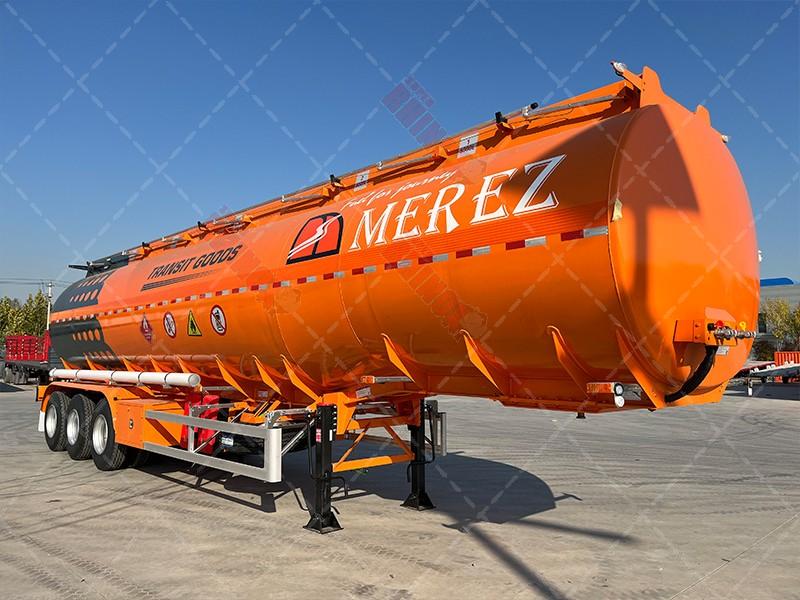
3.Engineering and Safety: Critical Systems for Hazardous Cargo
The safe transportation of flammable petroleum products relies on sophisticated engineering systems and strict regulatory compliance.
Tank Materials and Construction
The choice of construction material significantly impacts a trailer's performance and suitability for different products:
Carbon Steel: Provides a cost-effective option for non-corrosive products like diesel and gasoline, offering durability at a lower cost .
Stainless Steel: Offers superior corrosion resistance, making it suitable for a wider range of products including certain chemicals and acidic crude oils .
Aluminum Alloy: Creates a lighter-weight trailer that increases payload capacity within legal weight limits while providing good corrosion resistance .
Tank thickness is another critical consideration, with thicker walls typically used for larger capacity trailers or those transporting more hazardous materials to enhance durability and safety .
Safety Mechanisms
Modern Oil tanker trailers incorporate multiple layers of safety systems:
Emergency Shut-Off Valves: These valves, including sub-sea valves, can automatically isolate sections of the tanker in the event of an accident or pressure surge, preventing catastrophic releases .
Pressure Relief and Breathing Valves: These critical components automatically regulate internal pressure, preventing tank rupture during temperature fluctuations that cause liquid expansion and contraction .
Anti-Overfill Systems: Advanced sensor systems trigger alarms and automatic shut-off when liquid levels approach maximum capacity, preventing spills during loading operations .
Bottom-Loading Systems: Modern trailers increasingly feature bottom-loading designs, which are safer than traditional top-loading as they reduce vapor escape and minimize operator exposure during the loading process .
Stability and Handling Features
Tanker designers incorporate specific elements to address the unique handling challenges of liquid cargo:
Baffles: These internal partitions reduce liquid surge during acceleration, braking, and cornering, significantly improving vehicle stability . While they slightly reduce capacity, the safety benefits are substantial.
Aerodynamic Considerations: Tank shape and trailer design increasingly incorporate aerodynamic features to improve fuel efficiency and reduce cross-wind sensitivity .
Center of Gravity Management: Tank design carefully manages the center of gravity through appropriate height-to-width ratios to enhance rollover stability .
4.Operational Considerations and Industry Trends
Beyond the physical trailer, operational factors and evolving technologies continue to shape the oil tanker industry.
Regulatory Compliance
Oil tanker operations are governed by strict regulations that vary by jurisdiction. In the United States, the Department of Transportation (DOT) establishes guidelines for transporting hazardous materials, including weight limits and safety standards . Many regions require special certifications for drivers transporting hazardous materials, ensuring they possess the knowledge to handle emergencies properly .
Maintenance Protocols
Routine maintenance is essential for safe tanker operation. Key practices include:
Regular Inspections: Comprehensive checks of valves, brakes, tires, and structural components should be conducted before and after trips .
Interior Cleaning: Regular cleaning and decontamination prevent product contamination, especially when trailers transition between carrying different products .
Pressure Testing: Periodic testing ensures tank integrity and identifies potential leaks before they become safety issues .
Emerging Trends
The oil tanker industry continues to evolve with several notable trends:
Telematics and Automation: Advanced monitoring systems provide real-time data on location, fuel level, and trailer condition, enhancing logistics efficiency and security .
Environmental Enhancements: New designs focus on reducing emissions through improved aerodynamics and vapor recovery systems that capture escaped fumes during loading .
Specialization: Increasingly specialized trailers are being developed for specific products like biodiesel and other alternative fuels, reflecting changes in the energy landscape .
Oil tanker trailers represent a remarkable fusion of engineering precision and practical functionality, enabling the safe and efficient transportation of the diverse petroleum products that power our modern world. From the common gasoline tanker supplying your local station to the specialized crude oil trailers serving remote extraction sites, these vehicles are customized for their specific cargoes through meticulous design choices involving materials, compartments, and safety systems.
Qingdao Rhinox Vehicle CO., LTD is a prominent manufacturer in the special vehicle industry, leveraging over 30 years of expertise to produce high-performance semi-tractor trailers with a strong commitment to the Super Rhinox standard of reliability and innovation. The company operates from a sizable factory and has a substantial annual production capacity. Its core product portfolio includes specialized trailers such as Oil Tanker Trailers, alongside other key offerings like Powder Bulker Trailers for dry bulk materials, Asphalt Tank Trailers equipped for high-temperature material transport, and Sulfuric Acid Tankers designed with enhanced safety features for hazardous chemicals . By combining a large R&D team with strict quality control, the company serves a global market as a long-term partner dedicated to advancing the future of transportation.