





How wide is a flatbed trailer?
 Dec 23, 2024|
 View:1313
Flatbed trailers are an essential component in the transportation industry, providing versatility and efficiency for various cargo types. This article explores the flatbed trailer dimensions, uses, and benefits of flatbed trailers, with a focus on their width and other relevant specifications.
What is a Flatbed Trailer?
A flatbed trailer is a type of trailer that has a flat, level bed without sides or a roof. This design allows for easy loading and unloading of cargo from the sides, back, or top. Flatbed trailers are commonly used to transport heavy machinery, construction materials, and other large items that do not fit in enclosed trailers.
Flatbed Trailer Dimensions: Standard Sizes and Specifications
Flatbed trailers are widely used in freight transportation due to their open design and versatility. Common flatbed trailer dimensions vary based on regional regulations and cargo needs:
Length: Typically ranges from 48 to 53 feet (14.6–16.2 meters) in the U.S., with some extendable models reaching 80 feet (24.4 meters). European flatbeds often max out at 13.6 meters (44.6 feet).
Width: Standard widths are 8.5 feet (2.6 meters) in North America and 2.55 meters (8.4 feet) in Europe.
Height: Deck height is usually 3–5 feet (0.9–1.5 meters) above ground, while legal load height limits often cap at 13.5 feet (4.1 meters).
Weight Capacity: Ranges from 40,000 to 80,000 lbs (18–36 metric tons), depending on axle configuration.
Some flatbeds feature removable sides or expandable widths for oversized loads. Always check local regulations for exact limits.
Standard Flatbed Trailer Dimensions
The width of a flatbed trailer can vary based on its design and purpose, but standard widths typically fall within specific ranges:
A 48-foot flatbed trailer is a common type of trailer used in the transportation industry, particularly for hauling large and heavy loads. Understanding its dimensions, including width, is essential for logistics and compliance with transportation regulations.
Standard Width of a 48-Foot Flatbed Trailer
The standard width of a 48-foot flatbed trailer is typically 8.5 feet (102 inches). This width is designed to comply with legal regulations in the United States and many other regions, allowing for safe and efficient transport on public roads. The 8.5-foot width is crucial for ensuring that the trailer can navigate standard roadways without requiring special permits for oversize loads.
Importance of Width
The width of a flatbed trailer plays a vital role in its functionality:
Cargo Capacity: The 8.5-foot width allows for the transport of a variety of cargo types, including pallets, machinery, and construction materials. This width provides ample space for loading, ensuring that items can be arranged securely without overhanging the trailer edges.
Stability: A wider trailer enhances stability, especially when carrying heavy loads. This stability is crucial for safe maneuvering, particularly on highways and uneven terrain.
Compliance with Regulations: Transporting loads that exceed the standard width may require special permits and adherence to specific regulations. By maintaining a width of 8.5 feet, operators can avoid the complexities associated with oversize load permits.
Variations in Design
While the standard width is 8.5 feet, some flatbed trailers may have different designs:
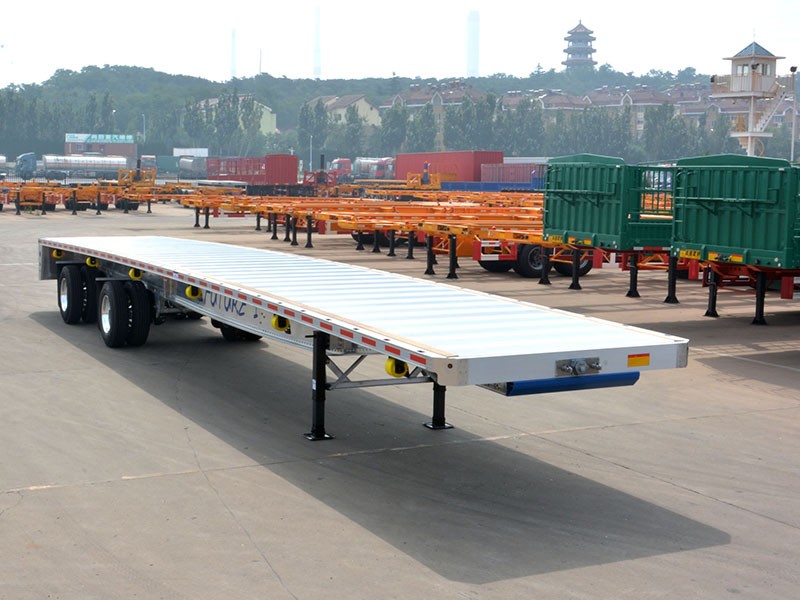
Wide Load Trailers: For oversized cargo, there are trailers that can be wider than the standard 8.5 feet, often measuring up to 10 or 12 feet. However, these require special permits for transportation.
Step Deck and Double Drop Trailers: These types of flatbed trailers may have varying widths while maintaining the overall height requirements for transporting taller loads. Their design aims to keep the load within legal height limits while providing additional stability.
Types of Flatbed Trailers
Flatbed trailers come in several types, each designed for specific applications:
Standard Flatbed Trailers: These are the most common type, used for transporting general freight. They have a flat surface and can accommodate a variety of cargo sizes and shapes.
Step Deck Trailers: Also known as drop deck trailers, these have a lower deck height to accommodate taller cargo while keeping the load within legal height limits. The design allows for better stability when transporting oversized items.
Double Drop Trailers: These trailers feature two drop sections and are designed for exceptionally tall loads. They have a lower center of gravity, which improves stability during transport.
Removable Gooseneck Trailers (RGN): RGNs are specialized flatbed trailers where the front section can be detached, allowing for easier loading of heavy equipment. This design is especially useful for transporting construction machinery and other large items.
Advantages of Flatbed Trailers
Flatbed trailers offer several benefits that make them a popular choice in the transportation industry:
Versatility: Flatbed trailers can carry a wide range of cargo, from pallets of goods to heavy machinery. This versatility makes them suitable for various industries, including construction, agriculture, and logistics.
Easy Loading and Unloading: The open design of flatbed trailers allows for quick loading and unloading, reducing the time and labor needed to handle cargo. Forklifts and cranes can easily access the trailer from all sides.
Increased Stability: The low deck height of many flatbed trailers enhances stability, particularly when transporting heavy or oversized loads. This stability is crucial for safe transport on highways and uneven surfaces.
Cost-Effective: Flatbed trailers are often more cost-effective than enclosed trailers, both in terms of purchase price and maintenance. They typically require fewer repairs and have lower operating costs.
Regulatory Compliance: Flatbed trailers can easily meet transportation regulations for width and height, provided they are used within legal limits. This compliance simplifies the logistics of transporting goods across state lines or national borders.
Flatbed trailers play a vital role in the transportation industry, offering a combination of versatility, efficiency, and cost-effectiveness. With a standard width of 8.5 feet and various types available to accommodate different cargo needs, flatbed trailers are essential for transporting large and heavy items. Their design facilitates easy loading and unloading, making them a preferred choice for many businesses. Understanding the specifications and advantages of flatbed trailers can help businesses make informed decisions when selecting the right equipment for their transportation needs.