





What are flatbed trailers called?
 Apr 24, 2025|
 View:1945
Flatbed trailers are indispensable in modern logistics and transportation, serving as versatile tools for hauling oversized, heavy, or unconventional cargo. This article explores their nomenclature, design variations, and industrial applications, drawing insights from industry experts and technical resources.
1. What Are Flatbed Trailers Called?
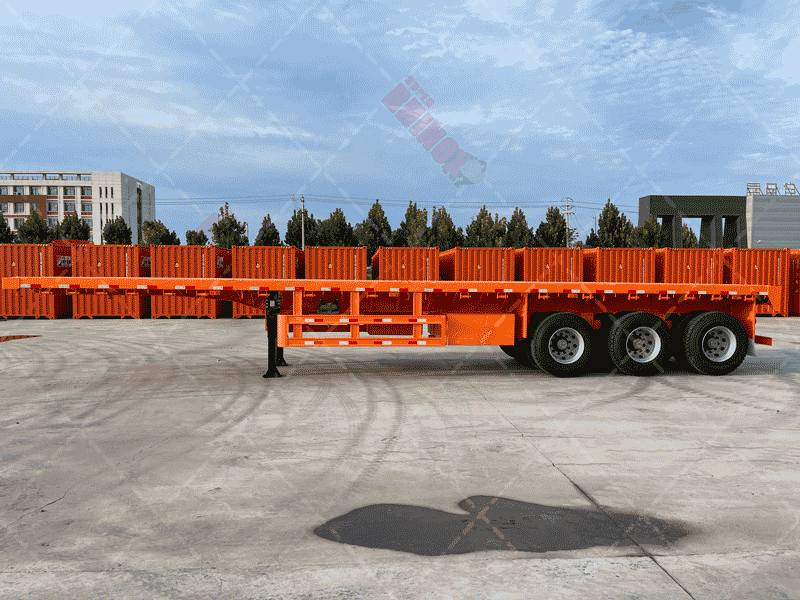
Flatbed trailers are universally referred to by several terms, including:
• Flatbed Truck: Emphasizes their role in towing cargo.
• Platform Trailer: Highlights their open, flat platform design.
• Open-Deck Trailer: Describes the lack of sidewalls or roofs.
• Lowboy Trailer: A subtype with a lowered deck for tall cargo.
• Step Deck Trailer: Features a two-tier deck for oversized loads.
These terms often overlap, but their usage depends on regional preferences or specific design features .
2. Structural Characteristics
Flatbed trailers share core design principles that enhance functionality:
• Open Design: No sidewalls or roofs, enabling unobstructed access for cranes, forklifts, or manual loading .
• Material Versatility: Constructed from aluminum (lightweight, corrosion-resistant) or steel (high durability) .
• Customizable Features:
• Expandable Decks: Adjustable length for ultra-long cargo (e.g., construction beams).
• Retractable Curtains: Side panels for weather protection (e.g., Conestoga trailers) .
• Detachable Components: Removable gooseneck sections for heavy machinery transport .
3. Key Types of Flatbed Trailers
Flatbed trailers are categorized based on design and application:
A. Standard Flatbed Trailers
• Description: The most common type, with a fixed deck length (typically 48–53 feet) and a bulkhead at the front to prevent cargo shifts .
• Uses: Ideal for transporting lumber, steel coils, and machinery .
B. Lowboy Trailers
• Features: A depressed deck height (as low as 12–18 inches) to accommodate tall equipment like excavators or industrial boilers .
• Advantage: Reduces the need for permits in states with strict height regulations .
C. Step Deck Trailers
• Design: A two-tier deck (higher near the cab, lower at the rear) to handle loads exceeding standard height limits (up to 10 feet) .
• Common Cargo: Wind turbine blades, large HVAC units.
D. Stretch Double Drop Trailers
• Purpose: Designed for exceptionally long cargo (up to 69 feet). The deck slopes downward to maintain legal height restrictions .
• Limitations: Heavier and subject to stricter axle-load regulations .
E. Removable Gooseneck (RGN) Trailers
• Mechanism: A foldable front section acts as a ramp for wheel-mounted equipment (e.g., tractors, military vehicles) .
• Efficiency: Eliminates the need for cranes, reducing loading time .
4. Industry Applications
Flatbed trailers are pivotal across diverse sectors:
A. Construction
• Transport steel girders, concrete pipes, and prefabricated components. Their open design allows forklifts to load/unload directly on-site .
B. Automotive
• Carry vehicles (e.g., cars, motorcycles) using tie-down straps or wheel restraints. Lowboys are popular for hauling luxury cars to dealerships .
C. Energy Sector
• Haul wind turbine blades, solar panels, and drilling equipment. Step decks and stretch trailers are preferred for oversized components .
D. Agriculture
• Transport hay bales, livestock feed, and machinery. Side curtains protect perishable goods from weather .
E. Military Logistics
• Deployed for equipment transport in field operations. RGN trailers are used for tanks and artillery .
5. Technical Terminology
Understanding specialized terms enhances communication in logistics:
• Bulkhead: A reinforced wall at the trailer’s front to prevent cargo shifts during braking .
• Fifth Wheel: A coupling mechanism attaching the trailer to the tractor .
• Headache Rack: A protective barrier between the cab and trailer to shield drivers from shifting loads .
6. Challenges and Innovations
• Weight Limits: Standard flatbeds max out at 48,000 lbs, necessitating specialized permits for overweight loads .
• Regulatory Compliance: Vary by region; for example, lowboys may require permits in certain U.S. states .
• Safety Enhancements: Modern trailers include GPS tracking, load-securing systems, and automated braking .
Flatbed trailers, though simple in design, are engineering marvels that enable global trade and infrastructure development. Their adaptability—from lowboys to RGNs—makes them indispensable in industries ranging from construction to energy. As logistics evolve, innovations in materials and safety features will further solidify their role in modern transportation.