





What is a Skeletal Trailer?
 Jun 20, 2025|
 View:1144
Skeletal trailer, also known as a skeleton trailer or skeletal semi-trailer, is a specialized type of freight trailer characterized by its open-frame design that resembles a "skeleton." Unlike enclosed box trailers or flatbeds, skeletal trailers feature a minimal framework structure that provides support for specific types of cargo while leaving most of the load exposed.
These trailers are primarily designed to transport heavy or oversized loads that wouldn't fit within standard enclosed trailers or that require special loading/unloading considerations. The skeletal design offers several advantages for particular shipping needs while presenting some limitations for general freight applications.
Design Characteristics
Structural Framework
The most distinctive feature of skeletal trailers is their exposed metal framework, typically constructed from high-strength steel or aluminum alloys. This framework includes:
Longitudinal I-beams or C-channel members running the length of the trailer
Crossmembers spaced at regular intervals for structural support
Reinforced kingpin and landing gear areas
Minimal side panels (often just enough to meet regulatory requirements)
Deck Configurations
Skeletal trailers come in several deck configurations:
Flat Deck: A completely open flat surface similar to a flatbed but with the skeletal framework beneath
Step Deck: Features two deck levels to accommodate taller loads
Extendable: Some models have extendable frames to handle longer loads
Multi-axle: Many skeletal trailers have multiple axles (often 3-4) to distribute heavy loads
Weight Considerations
The skeletal design provides significant weight savings compared to enclosed trailers:
Typical empty weight: 10,000-15,000 lbs (4,500-6,800 kg)
Payload capacity: Up to 80,000 lbs (36,000 kg) gross weight in most jurisdictions
The weight savings allows for heavier payloads within legal weight limits
Common Uses and Applications
Intermodal Transportation
One of the primary uses of skeletal trailers is in intermodal shipping, particularly for container transport:
Designed to carry standard 20', 40', or 45' shipping containers
The trailer frame has twist locks to securely fasten containers
Allows quick transfer between ship, rail, and truck without container handling equipment
Heavy Equipment Transport
Skeletal trailers excel at moving heavy machinery and equipment:
Construction equipment (bulldozers, excavators, cranes)
Industrial machinery
Agricultural equipment
Oilfield equipment
Oversized Loads
The open design accommodates loads that exceed standard dimensional limits:
Tall structures that wouldn't fit in enclosed trailers
Wide loads that need specialized permitting
Long loads that require extendable trailers
Specialized Cargo
Other specialized applications include:
Prefabricated building components
Large pipes and tubing
Wind turbine components
Military equipment transport
Advantages of Skeletal Trailers
Weight Efficiency
The reduced weight of the skeletal structure allows for:
Heavier payloads within legal weight limits
Better fuel efficiency compared to heavier trailers
Reduced wear on tractor components
Loading Flexibility
The open design provides:
Easy top-loading and side-loading capabilities
Access for cranes and forklifts from multiple angles
Ability to accommodate irregularly shaped cargo
Durability and Maintenance
Skeletal trailers offer:
Fewer components that can fail compared to enclosed trailers
Easier inspection of structural components
Simplified repair processes for the framework
Longer service life with proper maintenance
Cost Effectiveness
Economic benefits include:
Lower initial purchase cost than enclosed trailers
Reduced maintenance costs
Higher payload capacity can mean fewer trips
Versatility for multiple types of cargo
Limitations and Considerations
Cargo Protection
The open design means:
No protection from weather elements (rain, snow, sun)
No security from theft or tampering
Potential for cargo damage from road debris
Requires additional tarps or covering for sensitive loads
Loading Requirements
Special considerations include:
Need for proper load securing (chains, binders, straps)
Often requires specialized loading equipment
May need pilot cars or special permits for oversized loads
Higher skill requirement for drivers in load securement
Regulatory Compliance
Operators must consider:
Bridge laws and weight distribution requirements
Oversize/overweight permitting processes
State-by-state dimensional regulations
Special lighting and marking requirements for wide loads
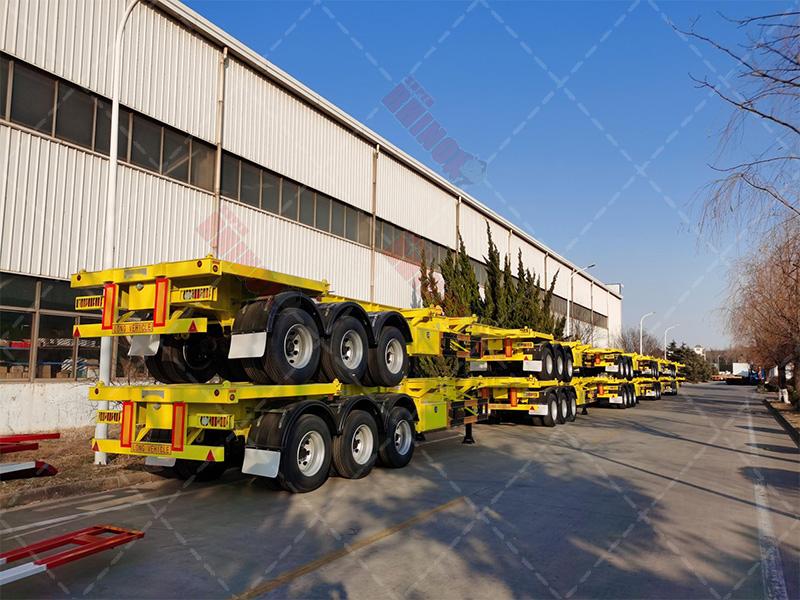
Types of Skeletal Trailers
Container Chassis
Specialized skeletal trailers designed specifically for intermodal containers:
Fixed or adjustable spacing for different container lengths
Twist lock mechanisms for secure attachment
Often have flip-up rear bumpers for bottom-loaded containers
Extendable Flatbeds
Skeletal trailers with adjustable length:
Hydraulic or manual extension mechanisms
Used for particularly long loads like pipes or beams
Require careful attention to weight distribution when extended
Multi-Axle Configurations
Heavy-duty variants include:
3-axle designs for heavier loads
Spread axle configurations for better weight distribution
Self-steering axles to reduce tire wear
Gooseneck Skeletal Trailers
Feature a gooseneck design for:
Improved weight distribution
Better maneuverability
Higher payload capacities
Comparison with Other Trailer Types
Vs. Enclosed Dry Vans
Skeletal Trailers:
Higher weight capacity
Better for oversized loads
Lower purchase cost
No weather protection
Dry Vans:
Complete weather protection
Better security
Limited to standard dimensions
Lower weight capacity
Vs. Standard Flatbeds
Skeletal Trailers:
Lighter weight construction
Often more axles for heavy loads
Designed for specific cargo types
Better for intermodal use
Standard Flatbeds:
Simpler design
Lower cost for basic applications
May have wood decking
Fewer specialized features
Vs. Lowboy Trailers
Skeletal Trailers:
Higher deck height
Not ideal for extremely tall loads
Better for container transport
Lowboys:
Extremely low deck height
Designed for very tall equipment
Often have more axles
Higher cost and weight
Maintenance Requirements
Routine Inspections
Key areas to check regularly:
Structural welds and frame members for cracks
Axle alignment and suspension components
Kingpin and fifth wheel connection points
Brake systems and air lines
Lighting and electrical connections
Lubrication Points
Critical lubrication needs include:
Landing gear mechanisms
Suspension components
Fifth wheel plate (if equipped)
Any moving parts in extendable models
Corrosion Protection
Important for longevity:
Regular cleaning, especially of salt in winter climates
Touch-up painting of damaged areas
Inspection of aluminum components for galvanic corrosion
Proper storage when not in use
Safety Considerations
Load Securement
Critical safety factors:
Proper use of chains, binders, and straps
Adequate number of tie-down points
Correct weight distribution
Regular inspection of securement during transit
Driver Training
Special skills required:
Oversize load handling
Proper load distribution techniques
Use of extension/retraction mechanisms
Route planning for dimensional constraints
Road Safety
Important precautions:
Proper lighting and marking for wide loads
Attention to height clearances
Use of pilot cars when required
Compliance with seasonal weight restrictions
Future Trends in Skeletal Trailer Design
Material Innovations
Emerging developments include:
Advanced high-strength steel alloys
Increased use of aluminum for weight reduction
Composite material integration
Corrosion-resistant coatings
Smart Trailer Technologies
Incorporation of:
Load monitoring sensors
Structural health monitoring systems
Automated length adjustment
Integrated weighing systems
Aerodynamic Improvements
Design enhancements for:
Fuel efficiency
Reduced wind resistance
Improved stability at highway speeds
Environmental Considerations
Sustainable developments:
Lightweighting for reduced emissions
Recyclable material use
Electric axle developments
Compatibility with alternative-fuel tractors
Skeletal trailers serve as vital tools in the transportation industry, offering unique capabilities for heavy, oversized, and specialized loads that conventional trailers cannot handle. Their open-frame design provides the perfect balance between structural strength and weight efficiency, making them indispensable for industries ranging from intermodal shipping to heavy equipment transport.
While they lack the cargo protection of enclosed trailers, their versatility, durability, and high payload capacity ensure their continued relevance in freight transportation. As technology advances, we can expect to see smarter, lighter, and more efficient skeletal trailer designs that maintain their core advantages while addressing current limitations.
With over 30 years of expertise in the special vehicle industry, Qingdao Rhinox Vehicle CO., LTD is a trusted skeletal trailer manufacturer and supplier, delivering approximately 8,000 vehicles annually.