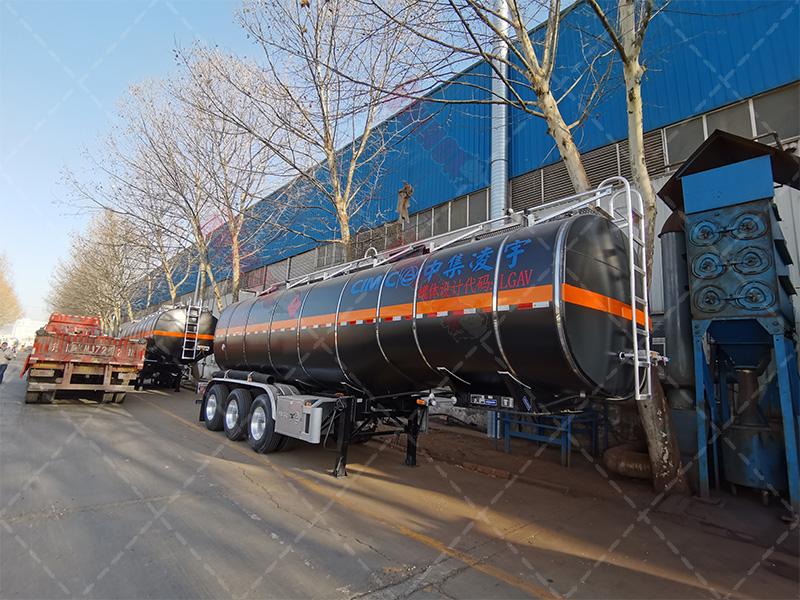





Asphalt Tank Trailers: The Vital Artery of Modern Infrastructure
 Oct 31, 2025|
 View:611
In the intricate network of modern construction and infrastructure development, few components are as critical, yet as specialized, as the asphalt tank trailer. These are not mere transport vehicles; they are highly engineered thermal containers on wheels, designed to carry one of the most challenging and temperature-sensitive materials in the industrial world: hot mix asphalt (HMA). From the bustling asphalt plant to the remote paving site, these trailers ensure that the lifeblood of our roads, highways, and airport runways arrives ready for application, maintaining the precise conditions required for a durable and smooth surface. This article delves into the intricacies of asphalt tank trailers, exploring their design, types, construction materials, and the sophisticated logistics of their operation.
Product Introduction
An asphalt tank trailer is a semi-trailer specifically engineered to transport hot liquid asphalt or hot mix asphalt. Its primary function is not simply to carry the material but to keep it within a strict temperature range—typically between 135°C and 165°C (275°F and 325°F)—for extended periods. If the asphalt cools below a certain threshold, it begins to solidify, becoming unusable and causing massive blockages in the tank and discharge system. Conversely, overheating can degrade the asphalt's binding properties, leading to a poor-quality final product.
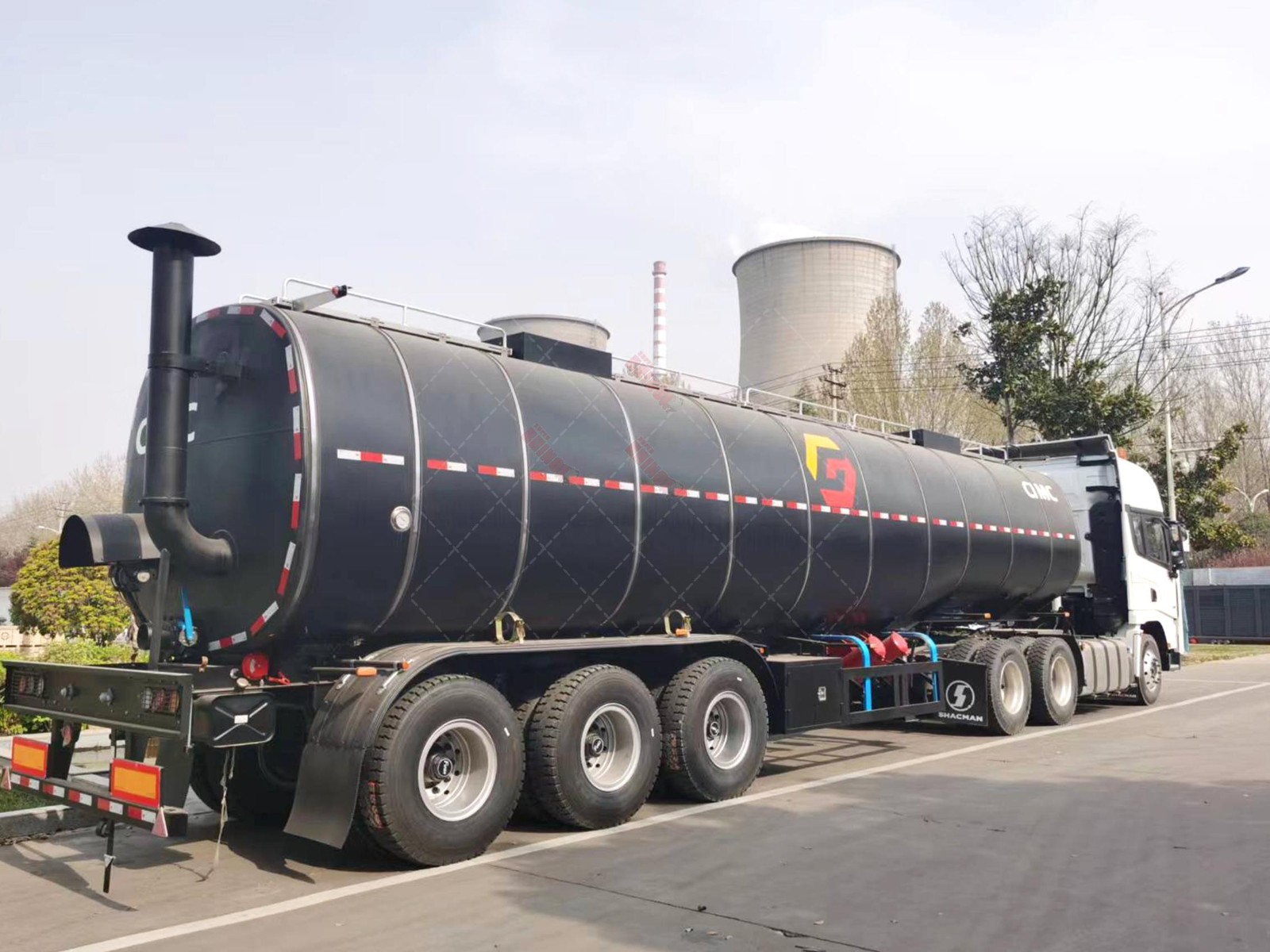
The core of the trailer is its tank, which functions as a giant thermos. It is heavily insulated with materials like mineral wool or fiberglass to minimize heat loss. Unlike fuel tankers, asphalt trailers are equipped with heating systems to actively maintain temperature during transit and at the job site. These systems often consist of tubes that run along the bottom and sides of the tank, through which hot thermal oil is circulated from a dedicated onboard heater. This indirect heating method provides even, controlled warmth without scorching the asphalt.
The rear discharge system is another critical component. It features internal valves and a manifold, often with multiple outlets, connected to hoses that transfer the hot asphalt to the paver. Many modern trailers are also equipped with agitation systems. These can be simple bubbling systems that use compressed air to keep the material moving or more advanced mechanical stirrers that prevent the heavier aggregates in the mix from settling and segregating, ensuring a consistent discharge.
Types of Asphalt Tank Trailers
While all asphalt tank trailer share the same fundamental purpose, they can be categorized based on their specific design and the type of asphalt they carry.
Hot Oil Heated Trailers: This is the most common and versatile type. They feature an independent diesel-fired boiler that heats a thermal oil. This hot oil is then pumped through a closed-loop circuit of pipes (heating coils) that surround the tank. They are highly effective for long-distance hauls and for maintaining temperature over extended periods, especially in colder climates.
Direct-Fired Heaters: Less common today due to safety and control concerns, these trailers use burners that direct flames into tubes running through the asphalt. While they can heat the material very quickly, they carry a higher risk of overheating and damaging the asphalt if not meticulously controlled.
Tank Types for Different Products:
Hot Mix Asphalt (HMA) Trailers: Designed to carry a mixture of aggregate (stone, sand, gravel) and liquid asphalt cement. These trailers often require agitation systems to keep the heavy mix homogeneous.
Liquid Asphalt (Bitumen) Tankers: These transport the pure, viscous liquid asphalt binder itself, which is then mixed with aggregates at a separate, mobile plant at the job site. They typically do not need agitators but require robust heating to keep the highly viscous bitumen fluid.
Material and Construction: Built for Extreme Conditions
The construction of an asphalt tank trailer is a testament to durability. The materials must withstand extreme thermal cycling, internal abrasion from the aggregate, and the rigors of constant road travel.
Tank Shell: The primary material for the tank is carbon steel, chosen for its strength and excellent thermal conductivity, which is essential for efficient heat transfer from the heating coils. The interior is often bare, but some manufacturers apply specialized high-temperature coatings to reduce corrosion and material sticking.
Insulation: Effective insulation is paramount. Layers of high-density mineral wool or fiberglass, often several inches thick, are applied to the entire exterior of the steel tank. This insulation is then covered by an aluminum or stainless steel cladding, which protects it from weather and physical damage. Aluminum is favored for its light weight and corrosion resistance.
Substructure and Chassis: The trailer's frame, axles, and landing gear are constructed from high-tensile strength steel to support the immense weight of the payload. Asphalt is extremely dense, so these trailers are built to operate at or near their maximum legal weight limits.
Heating System Components: The boiler, pipes, and pumps for the hot oil system are typically made from stainless steel or other alloys resistant to high temperatures and corrosion.
The entire unit is engineered with a focus on weight savings without compromising strength, as every kilogram saved on the trailer's tare weight translates into an additional kilogram of profitable asphalt payload.
Application and Operational Logistics
The application of an asphalt tank trailer is a carefully choreographed dance between the batch plant and the paving crew. Its role is the critical link in the "hot chain" – the uninterrupted sequence from production to placement.
The process begins at the asphalt plant, where aggregates are dried, heated, and mixed with liquid asphalt. The hot mix is loaded into the trailer through top hatches. The driver must then transport the load to the construction site as efficiently as possible. During transit, the onboard heating system is activated to counteract heat loss. Modern trailers are equipped with sophisticated temperature monitoring systems, allowing the driver to track the core temperature of the load remotely.
Upon arrival at the site, the trailer reverses into position in front of the paver. The hoses are connected from the trailer's discharge manifold to the receiving hopper of the paver. The hot asphalt is then discharged, either by gravity or, more commonly, by a live-bottom conveyor system or a forced flow created by the trailer's internal pressure or agitation system. The entire operation requires precise coordination to ensure a continuous supply to the paver, as any significant stoppage can create a "cold joint" in the matted asphalt, weakening the final pavement.
Beyond traditional road paving, these trailers are also essential for airport runway construction and repair, where specifications for material temperature and consistency are even more stringent. They are also used to transport specialized asphalt products for roofing, waterproofing, and industrial flooring.
In conclusion, the asphalt tank trailer is a masterpiece of industrial engineering. It is a mobile, temperature-controlled vessel that solves the complex problem of transporting a temperamental construction material. Its robust construction, sophisticated heating technology, and specialized design make it an indispensable asset, quietly ensuring that the infrastructure connecting our world is built to last. Without these workhorses of the highway, the smooth, durable roads we rely on every day would be impossible to construct efficiently and effectively.