





What is the difference between a flatbed trailer and a low bed trailer?
 Aug 28, 2025|
 View:872
Among the myriad of trailer types, two workhorses of the heavy and oversized cargo world stand out: the standard flatbed trailer and the specialized low bed trailer. While often mentioned in the same breath due to their open-deck design, they are engineered for distinctly different purposes. Understanding their differences is not just academic; it is crucial for logistics planners, shippers, and anyone involved in the supply chain for industrial, construction, and energy sectors.
At first glance, one might simplistically think of a low bed as just a "lower flatbed." However, the reality is far more nuanced, encompassing design philosophy, legal constraints, and specialized functionality. This article will dissect these two trailer types across several key dimensions: design and physical characteristics, load specifications, operational requirements, and primary applications.
1. Design and Physical Characteristics: The Foundation of Difference
The most immediate and obvious difference lies in their physical structure and how it impacts their deck height.
The Flatbed Trailer: The Versatile Workhorse
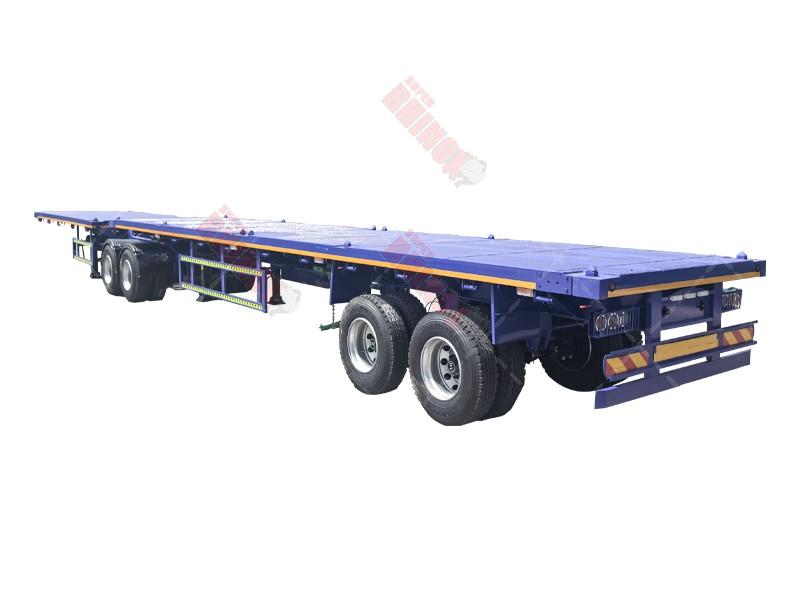
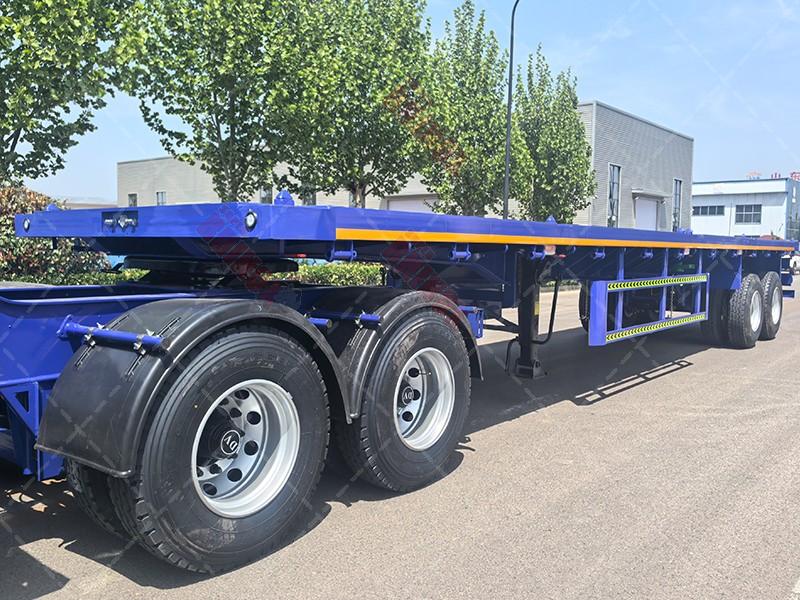
A standard flatbed trailer is the epitome of utilitarian design. It features a completely flat, level deck mounted on a conventional trailer frame that sits at a standard height from the ground, typically ranging from 48 to 60 inches. This height is aligned with standard dock heights for easy loading and unloading with forklifts and cranes.
Deck: The deck is long, wide, and completely unobstructed, offering maximum flexibility for cargo placement. It has no sides or roof, allowing for loading from the sides, top, and ends.
Structure: Its construction is relatively straightforward. The frame consists of parallel I-beams supporting a wooden or steel deck. It is equipped with fixed gooseneck, which connects to the fifth wheel of the tractor.
Tie-downs: The perimeter of the deck is lined with sturdy tie-down points, such as rub rails and stake pockets, allowing for the securement of cargo with straps, chains, and tarps.
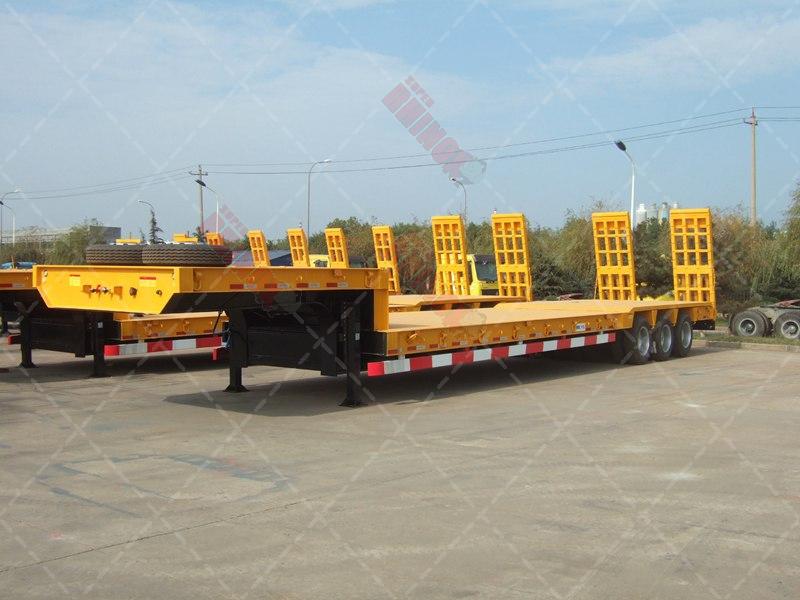
The Low Bed Trailer (Lowboy): The Engineering Marvel
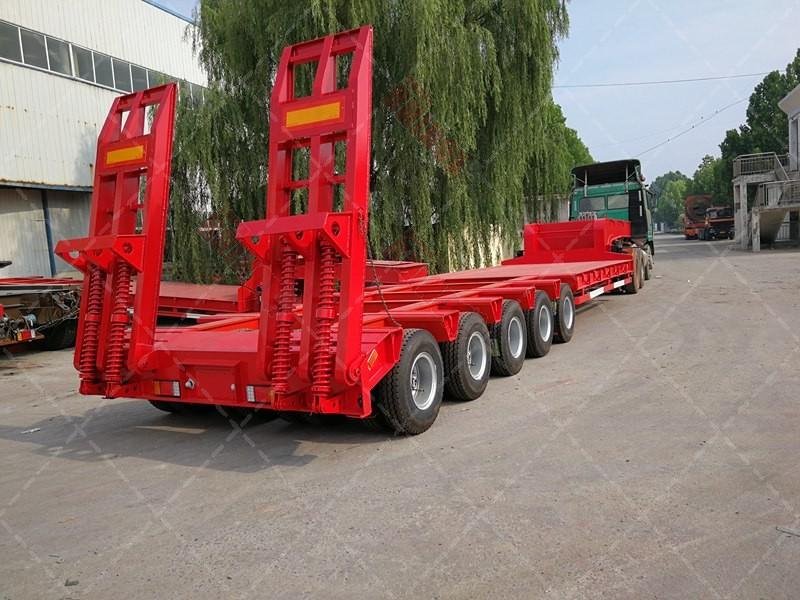
The low bed trailer, often called a lowboy or low-loader, is engineered with one primary goal: to minimize deck height. This is achieved through a radical redesign of the trailer’s architecture.
Deck Height: This is the critical differentiator. A low bed’s deck height can be as low as 18 to 24 inches from the ground. This drastic reduction is what allows it to carry extremely tall equipment that would otherwise exceed legal height limits on public roads.
Structure: To achieve this low profile, the trailer frame is designed in two distinct sections. The rear section, or the "deck," is extremely low. The front section, which connects to the tractor, must accommodate the landing gear and the tractor’s fifth wheel height. This is often solved with a drop deck or a gooseneck that hydraulically detaches. The most common types are:
Fixed-Neck Lowboy: Has a permanent gooseneck that is lowered to the ground for loading.
Hydraulic Detachable Gooseneck (HDG): The gooseneck can be detached entirely. The trailer deck is lowered to the ground, the tractor drives away, and the cargo is loaded directly onto the deck. The tractor then returns, and the gooseneck is re-attached using hydraulics. This allows for the easiest loading of non-mobile equipment.
Deck: The deck often features a beavertail—a sloped section at the rear that facilitates driving equipment on and off. Ramps are almost always required for loading.
2. Load Specifications: Capacity vs. Dimension
The design differences directly translate into what each trailer can carry.
Flatbed Loads: The Breadth of Commerce
Flatbeds are the champions of versatility. They are designed for a wide array of cargo that is heavy but within standard dimensional limits. Their key load parameters are:
Weight: Typically rated for 40,000 to 50,000 lbs of payload, depending on the trailer's axle configuration and construction.
Height: Cargo height is limited by the standard deck height plus the maximum legal road height (usually 13.5 feet in the US). This makes them unsuitable for very tall machinery.
Common Cargo: Construction materials (lumber, steel coils, rebar), industrial equipment (generators, containers), machinery, and pre-fabricated building components.
Low Bed Loads: The Titans of Industry
Low beds are specialists in oversized, overweight, and over-dimensional freight. Their low deck is a direct answer to height restrictions.
Weight: Low beds are built for immense weight. It is common for them to have multiple axle lines (tandem, triple, or even quadruple) to distribute the load and meet bridge law requirements. They can often carry 80,000 to 150,000 lbs or more.
Height: Their superpower is handling tall cargo. By placing the base of a tall excavator or wind turbine blade just two feet off the ground, the total vehicle height remains legal.
Common Cargo: Heavy construction equipment (excavators, bulldozers, graders), large industrial transformers, wind turbine components, military vehicles, and pre-built bridge sections.
3. Operational and Regulatory Requirements
Using these trailers involves vastly different levels of planning and legal compliance.
Flatbed Operations: Routine with Vigilance
Operating a flatbed is a standard part of freight logistics. While it requires skilled drivers for load securement (governed by strict regulations like the FMCSA’s cargo securement rules), it generally does not require special permits for the majority of loads. Routes are planned using standard commercial GPS and mapping software.
Low Bed Operations: The World of Specialized Logistics
Moving a low bed is a project in itself. It almost always involves oversize/overweight permits from every state the load will travel through. This process can be time-consuming and costly. Route surveys are often necessary to check for low bridges, tight turns, and narrow roads. The transport typically requires:
Pilot Cars: Escort vehicles that drive ahead and behind the load to warn other traffic and assist the driver in navigating obstacles.
Route Planning: Highly detailed planning using specialized software to avoid any infrastructure that cannot accommodate the massive load.
Skill Level: Drivers of low beds are highly specialized professionals with extensive experience in heavy haul logistics.
4. Loading and Unloading Techniques
The loading process further highlights their divergent purposes.
Flatbed: Loading is highly flexible. Cranes, forklifts, and winches can place cargo from any direction. The standard deck height aligns with loading docks.
Low Bed: Loading is a more complex operation. Due to the extremely low deck, the primary method is driving mobile equipment on and off using the beavertail and ramps. For non-mobile cargo, a crane must carefully place the load, often requiring the detachable gooseneck (HDG) to be removed to allow clear access. This process is slower and requires more equipment and precision.
In summary, the difference between a flatbed and a low bed trailer is the difference between a versatile utility truck and a specialized engineering crane.
The Flatbed Trailer is a generalist. It is the backbone of open-deck shipping, prized for its flexibility, ease of use, and ability to handle a vast spectrum of heavy but dimensionally standard freight. It is the default choice for countless industries.
The Low Bed Trailer is a specialist. It is a precision instrument designed for one specific, critical task: moving the monumental, the towering, and the immensely heavy objects that drive large-scale construction and industry. Its use is more complex and expensive but is the only solution for countless critical projects.