





What is a refrigerated trailer called?
 Jul 28, 2025|
 View:938
Often referred to by its industry nickname, the reefer trailer, a refrigerated trailer is a specialized type of semi-trailer equipped with an integrated refrigeration unit. Its sole purpose is to transport perishable goods (like food, pharmaceuticals, and chemicals) within a tightly controlled temperature environment, maintaining product quality and safety throughout the journey. It's the backbone of the modern cold chain logistics system.
1. Product Introduction:
A refrigerated trailer is far more than just an insulated box on wheels. It's a sophisticated mobile climate chamber. Constructed with advanced insulation materials (typically polyurethane foam sandwiched between aluminum or fiberglass-reinforced plastic panels), it minimizes heat transfer. The heart of the system is the refrigeration unit, usually mounted on the front (nose) of the trailer, powered either by a diesel engine, the tractor unit's power ("electrically standby/city power" capability), or sometimes hybrid systems.
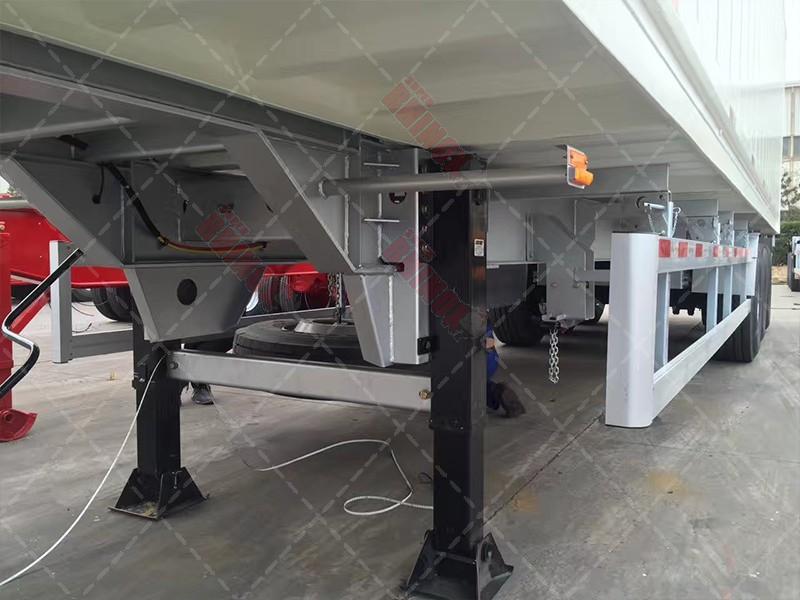
Core Components:
Insulated Body: Walls, roof, floor, and doors provide thermal resistance (R-values typically exceeding R-28).
Refrigeration Unit: Compressor, condenser, evaporator, and sophisticated control system manage temperature, humidity, and airflow.
T Floor: An engineered floor featuring grooves (often T-shaped or C-shaped) and drain holes to promote essential air circulation around the palletized load from the bottom up.
Interior Linings: Smooth, durable, and easy-to-clean surfaces (often food-grade polymer/fiberglass) promote hygiene.
Sealing System: Heavy-duty door gaskets and body seals prevent air leaks and ensure airtight insulation.
Control System: Modern digital controllers allow precise temperature setting, monitoring (often with real-time telematics), and recording (for compliance).
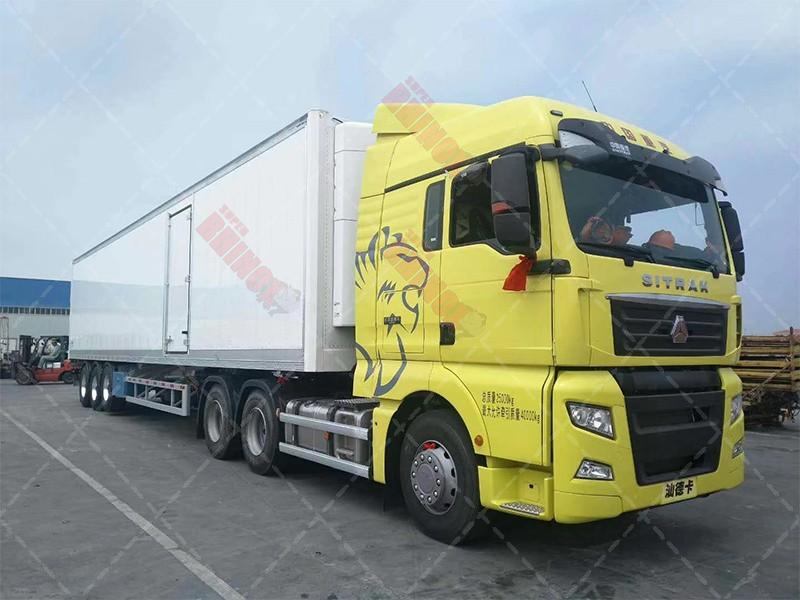
2. Product Types:
Reefer trailers can be categorized in several ways:
By Temperature Range & Primary Use:
Frozen Food Trailers (-20°F to +15°F / -29°C to -9°C): Designed for transporting ice cream, frozen meats, seafood, and prepared meals. Highest insulation specs and powerful cooling capacity.
Chilled/Refrigerated Trailers (+28°F to +38°F / -2°C to +3°C): For perishables like fresh produce, dairy products, flowers, fresh meats, and beverages requiring above-freezing temperatures. Most common type.
Multi-Temperature Trailers (Multi-Temp Reefers): Feature complex ducting systems allowing multiple, separately controlled temperature zones within the same trailer body (e.g., frozen, chilled, and ambient sections). Ideal for complex deliveries requiring different products.
By Cooling Technology:
Mechanical Vapor Compression: Most common type, uses refrigerant gases (R-452A, transitioning to R-744/CO2) circulated via compressor/condenser/evaporator. Provides active cooling/heating.
Cryogenic Cooling (Less Common): Uses liquid nitrogen (LN2) or liquid carbon dioxide (LCO2) sprayed into the trailer, absorbing heat as it evaporates ("passive" cooling). Simpler but requires refilling.
By Size & Configuration:
Standard Lengths: Typically range from 48 ft to 53 ft (14.6m to 16.2m) in North America; 13.6m is common in Europe. Heights generally 12.5 to 13.5 ft.
Capacity: Commonly designed for 26-30 standard shipping pallets (US size). Internal volume varies based on size and insulation thickness.
Specialized Types: Smaller straight truck reefers, intermodal container reefers (integrated into shipping containers), rail car reefers, etc.
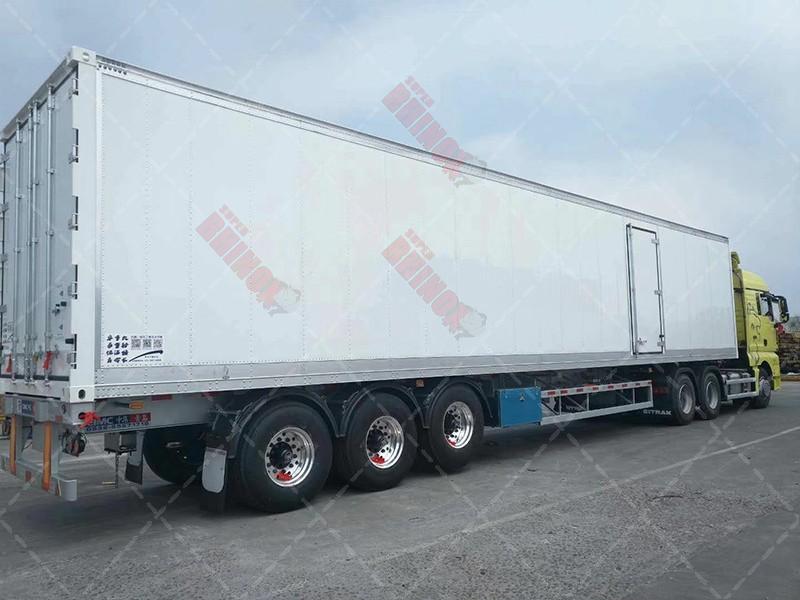
3. Product Advantages & Why Reefers are Essential:
Reefer trailers offer significant advantages crucial for transporting temperature-sensitive products:
Precise Temperature Control: Advanced systems maintain set points within a fraction of a degree, preventing spoilage or damage caused by freezing/thawing cycles.
Product Safety & Quality Preservation: Critical for preventing microbial growth in food and maintaining efficacy/potency of pharmaceuticals (vaccines, biologics). Extends shelf life significantly.
Regulatory Compliance: Essential for meeting stringent food safety regulations (e.g., FDA's FSMA Sanitary Transportation Rule, EU GDP for pharma) which mandate temperature control and monitoring throughout transit.
Reduced Product Waste (Shrink): By preventing spoilage, reefers drastically reduce financial losses for producers, distributors, and retailers.
Protection from External Elements: Insulation protects cargo from heatwaves, freezing outdoor temperatures, rain, and humidity fluctuations.
Versatility: Can handle a vast array of goods - fruits, vegetables, meat, seafood, dairy, bakery, beverages, flowers, pharmaceuticals, chemicals, film, and more.
Temperature Tracking & Reporting: Modern telematics allow real-time monitoring of location, temperature, humidity, and door openings, plus generation of reports for audit trails (compliance).
Improved Airflow Management: Engineered T-floors and evaporator designs promote uniform air circulation around all pallets, eliminating hot spots.
Global Trade Enablement: Makes it possible to safely transport perishable goods across vast distances and between countries.
Energy Efficiency: While high consumers, newer units utilize eco-friendly refrigerants (phasing out HFCs) and more efficient compressors/fans to reduce fuel consumption.
Feature | Frozen Food Trailer | Chilled Trailer | Multi-Temp Trailer |
Primary Temp Range | -20°F to +15°F (-29°C to -9°C) | +28°F to +38°F (-2°C to +3°C) | Separate zones (e.g., Fzn/Chld) |
Key Applications | Ice Cream, Frozen Meals/Seafood | Fresh Produce, Dairy, Beverages | Complex Deliveries, LTL Loads |
Insulation Level | Highest (Thicker Panels) | Standard - High | Variable (Zone Dependent) |
Cooling Capacity Required | Highest | High | Very High (Multiple Systems) |
Load Configuration | Critical Airflow | Critical Airflow | Critical Zone Sealing |
The refrigerated trailer, or reefer, is an indispensable technological marvel in global logistics. Far beyond simple cooling, it provides a controlled micro-environment that safeguards the integrity of vital products we consume daily. From ensuring the freshness of produce on supermarket shelves to guaranteeing the lifesaving effectiveness of vaccines, the reefer trailer plays a critical role in public health, economic efficiency, and reducing waste. Its continuous evolution, driven by tighter regulations, sustainability goals, and advancements in telematics, ensures it remains the reliable workhorse of the cold chain.